Modern supply chains are under pressure from every direction — volatile demand patterns, geopolitical disruptions, rising customer expectations, and the relentless complexity of global logistics networks. The organizations winning in this environment share a common capability: they use predictive analytics to anticipate problems before they occur, optimize decisions in real time, and build supply chain resilience that turns uncertainty into competitive advantage. This guide covers everything supply chain leaders, managers, and professionals need to know about predictive analytics in supply chain management — from how predictive models work and the key benefits they deliver, through the most impactful use cases and practical implementation guidance. If you're ready to transform your supply chain from reactive to proactive, this is your starting point.
What Is Predictive Analytics in Supply Chain Management?
Predictive analytics in supply chain management is the application of statistical algorithms, machine learning models, and advanced data analytics to supply chain data — with the goal of forecasting future events, identifying risks, and enabling proactive decision-making before disruptions occur. Rather than analyzing what has already happened, predictive analytics enables supply chain professionals to anticipate what is likely to happen next and act accordingly.
At its core, predictive analytics involves building mathematical models that learn from historical supply chain data — order histories, supplier performance records, transportation logs, demand signals, and external variables like weather, economic indicators, and geopolitical events — to generate probability-weighted forecasts of future outcomes. These predictive analytics models improve over time as they process new data, becoming more accurate and more useful as the volume and quality of supply chain data grows.
The distinction between traditional analytics and predictive supply chain analytics is significant. Traditional supply chain reporting tells managers what happened and why — useful for understanding past performance but insufficient for managing future risk. Predictive analytics gives supply chain leaders the forward visibility they need to make better decisions today, based on evidence about what tomorrow is likely to bring. According to McKinsey's Supply Chain Analytics Research, organizations that leverage predictive analytics in their supply chain operations report up to 65% reduction in lost sales due to stockouts and a 10-40% decrease in warehousing costs — outcomes that reflect the transformative potential of predictive analytics when applied systematically.

How Does Predictive Analytics Work in the Supply Chain?
Understanding how predictive analytics work in a supply chain context begins with data collection and integration. Predictive analytics requires a unified view of supply chain data from across the entire supply chain ecosystem — ERP systems, warehouse management platforms, transportation management systems, supplier portals, IoT sensors on equipment and inventory, and external data feeds covering market conditions, weather patterns, and supplier risk indicators. The quality and completeness of this data foundation directly determines the reliability of predictive outputs.
Once data is aggregated and prepared, predictive analytics algorithms process it to identify patterns, correlations, and trends that are statistically predictive of specific outcomes. These might include demand patterns that predict seasonal spikes, supplier behavior patterns that predict delivery delays, or equipment performance patterns that predict maintenance failures before they cause downtime. Predictive modeling techniques range from relatively straightforward time-series forecasting to sophisticated ensemble methods and deep learning architectures, with the choice of technique depending on the complexity of the prediction task and the nature of available data.
The output of predictive analytics work is not a single forecast but a probability distribution — a range of likely outcomes with associated confidence levels. This probabilistic framing is what makes predictive analytics so valuable for supply chain decision-making: rather than planning for a single expected scenario, supply chain managers can plan for a range of outcomes and build contingency strategies for the most consequential risks. Our process orchestration platform integrates predictive analytics capabilities with automated workflow execution — enabling supply chain organizations to move from insight to action without manual intervention.
What Are the Key Benefits of Predictive Analytics for Supply Chain Operations?
The key benefits of predictive analytics in supply chain management span every operational dimension — from inventory and procurement through logistics, supplier management, and customer service. The most immediately impactful benefit for most organizations is demand forecasting accuracy. Predictive analytics allows supply chain teams to move beyond simple historical averages and seasonal adjustments to sophisticated models that incorporate dozens of demand-influencing variables — improving forecast accuracy and dramatically reducing the costly consequences of over- and under-stocking.
Supply chain resilience is a second critical benefit. Global supply chains face constant disruption from supplier failures, transportation bottlenecks, geopolitical events, and natural disasters. Predictive analytics helps supply chain managers spot emerging risks early — flagging supplier financial distress signals, identifying potential port congestion before it affects delivery schedules, and modeling the downstream impact of disruptions before they cascade. This predictive risk engine capability transforms supply chain risk management from reactive crisis response to proactive risk mitigation.
Cost optimization across the supply chain is the third major benefit category. Predictive analytics enables more precise inventory positioning, smarter carrier selection, optimized routing, and better-timed procurement decisions — each of which contributes to measurable cost reduction. Analytics in supply chain helps organizations eliminate the inefficiency buffers they maintain to compensate for forecast uncertainty, replacing expensive safety stock with data-driven confidence. Gartner's Supply Chain Research identifies predictive analytics as one of the top technology investments among supply chain leaders, citing cost reduction and resilience improvement as the primary drivers of adoption.

What Are the Most Impactful Use Cases of Predictive Analytics in Supply Chain?
The use cases of predictive analytics in supply chain management are extensive and growing, but several stand out for their demonstrated business impact. Demand forecasting is the most widely deployed use case — companies can use predictive analytics to forecast demand at a granular level across products, geographies, and customer segments, enabling inventory positioning and production planning that aligns precisely with anticipated market needs. This use case alone justifies the investment in predictive analytics infrastructure for most supply chain organizations.
Predictive maintenance is a high-value use case that prevents costly equipment failures across the supply chain — in manufacturing plants, distribution centers, and transportation fleets. By analyzing sensor data from equipment to identify early indicators of impending failure, predictive maintenance analytics enables scheduled interventions before breakdowns occur, reducing unplanned downtime and extending asset lifecycles. DHL uses predictive analytics in its logistics operations to predict equipment failures and optimize maintenance scheduling across its global network — a use case that has delivered significant operational and cost improvements.
Supplier risk management is a third critical use case that demonstrates the breadth of applications for supply chain predictive analytics. Predictive analytics to anticipate supplier disruptions — using financial health indicators, delivery performance trends, geopolitical risk scores, and news sentiment analysis — allows supply chain professionals to diversify sourcing, build strategic inventory buffers, and engage alternative suppliers before a crisis materializes. For organizations seeking to build a comprehensive AI strategy that encompasses these use cases and more, our enterprise generative AI development services provide the technical foundation for deploying advanced predictive capabilities at enterprise scale.
How Does Predictive Analytics Support Inventory Optimization?
Inventory optimization is one of the most financially significant applications of supply chain predictive analytics, directly impacting working capital, storage costs, service levels, and waste. Traditional inventory management relies on reorder points and safety stock calculations based on historical averages — an approach that performs poorly in volatile demand environments. Predictive analytics enables a fundamentally more dynamic approach: continuously recalculating optimal inventory positions based on current demand signals, supply lead time forecasts, and risk assessments.
Predictive analytics models for inventory optimization can incorporate hundreds of variables that influence demand — promotional calendars, weather forecasts, economic indicators, competitor activity, social media sentiment, and seasonal patterns — to generate highly accurate, item-level demand forecasts. These forecasts drive automated replenishment decisions that maintain service levels while minimizing excess inventory. The result is a supply chain that operates with significantly leaner inventory without the stockout risk that lean inventory traditionally implies.
Analytics in the supply chain also enables predictive insights into supply lead time variability — anticipating when supplier delays or transportation disruptions are likely to extend lead times and adjusting inventory positions proactively before shortages develop. This bidirectional predictive capability — forecasting both demand and supply uncertainty simultaneously — is what makes modern predictive supply chain management so much more effective than traditional inventory planning approaches. MIT's Center for Transportation and Logistics Research has published extensively on the inventory optimization gains achievable through machine learning-based demand forecasting, documenting average inventory reductions of 20-50% alongside service level improvements.
How Can Predictive Analytics Improve Supplier and Risk Management?
Supply chain risk management has historically been reactive — organizations discover supplier problems when deliveries are missed, quality fails, or news of a supplier financial crisis breaks. Predictive analytics transforms this paradigm by enabling supply chain managers to continuously monitor the risk indicators that predict supplier problems before they materialize, allowing supply chain leaders to take protective action with days or weeks of advance warning rather than hours.
A predictive analytics solution for supplier risk monitoring aggregates diverse data sources — financial filings, credit ratings, delivery performance history, quality metrics, news feeds, weather and natural disaster data, and geopolitical risk indices — and applies machine learning models to identify the combinations of signals that historically precede supplier failures or disruptions. This multi-signal approach dramatically outperforms single-metric monitoring because supplier risk rarely manifests through a single obvious indicator before becoming a crisis.
Supply chain resilience is further enhanced when predictive analytics uses predictive analytics to simulate the downstream consequences of specific supplier disruptions — modeling which products would be affected, how quickly inventory buffers would be depleted, what alternative sourcing options exist, and what the cost of different response strategies would be. This scenario simulation capability, increasingly powered by ai-powered predictive analytics platforms, gives supply chain professionals the analytical tools to develop and maintain response playbooks for their most significant supplier risks. Learn how our AI security consulting services extend risk management principles into the cybersecurity dimensions of supply chain vulnerability.

What Role Does AI Play in Modern Predictive Supply Chain Analytics?
AI has elevated supply chain predictive analytics from a powerful tool into a genuine strategic capability. Traditional predictive analytics relied on analysts to identify relevant variables, select appropriate models, and interpret outputs — a process that was valuable but slow, resource-intensive, and limited in scale. AI-powered predictive analytics automates much of this analytical workflow, enabling supply chain organizations to run predictive models across their entire product portfolio, supplier base, and distribution network simultaneously.
Machine learning algorithms can process complex, high-dimensional supply chain data at a scale that human analysts cannot approach — identifying subtle, non-linear relationships between variables that predict supply chain outcomes with greater accuracy than any model a human analyst could construct manually. These AI models also adapt continuously as conditions change: when a new disruption pattern emerges — a new type of supplier risk, a new demand signal, a new logistics bottleneck — the models learn from the new data and update their predictions accordingly.
Generative AI is adding new dimensions to supply chain analytics beyond prediction — including the ability to generate natural language explanations of complex analytical findings, create scenario narratives that help supply chain leaders understand the strategic implications of different risk profiles, and synthesize insights across different supply chain stages into coherent recommendations. For a broader perspective on how generative AI is reshaping analytical and operational capabilities, our generative AI consulting services blog explores the strategic and implementation dimensions in depth. IBM's Institute for Business Value documents that supply chains using AI-augmented predictive analytics demonstrate measurably higher resilience scores and lower disruption recovery costs than those using conventional analytical approaches.
How Does Predictive Analytics Apply Across Different Industries and Supply Chain Types?
The applications of predictive analytics in supply chain management vary meaningfully across industries, reflecting the different risk profiles, demand patterns, and operational structures of different supply chain types. In retail and consumer goods, predictive analytics focuses heavily on demand forecasting, promotional lift modeling, and markdown optimization — where forecast accuracy directly translates into revenue and margin outcomes. In manufacturing, predictive maintenance and quality control analytics dominate, preventing the equipment failures and defect rates that drive production cost and customer satisfaction.
In agriculture and food supply chains, predictive analytics addresses the unique challenges of perishable inventory, weather-dependent supply variability, and complex cold chain logistics. Predictive models that incorporate weather forecasts, crop yield data, and seasonal demand patterns help agribusinesses and food distributors optimize purchasing, processing, and distribution decisions across a supply chain that operates under tight time and temperature constraints. Our work in the agriculture industry illustrates how AI-driven predictive capabilities are transforming one of the most complex and risk-exposed supply chain environments.
In logistics and transportation, predictive analytics enables route optimization, carrier performance prediction, and network capacity planning that reduces costs and improves delivery reliability across the supply chain. The transportation sector is among the most data-rich supply chain environments — with GPS telemetry, traffic data, weather feeds, and historical delivery records providing rich inputs for predictive models. Our exploration of AI in transportation covers these applications in depth, demonstrating how predictive analytics in logistics is reshaping freight and last-mile delivery operations globally.
What Are the Challenges of Implementing Predictive Analytics in Supply Chain?
Implementing predictive analytics in supply chain environments is not without significant challenges. Data fragmentation is the most common obstacle: supply chain data is typically scattered across multiple systems — ERPs, WMS platforms, TMS tools, supplier portals, and external data sources — often in incompatible formats and with inconsistent data quality standards. Before predictive analytics can deliver value, organizations must invest in data integration infrastructure that creates a unified, reliable supply chain data foundation.
Organizational capability gaps present a second major implementation challenge. Effective supply chain predictive analytics requires a combination of data science expertise, supply chain domain knowledge, and change management capability that most organizations don't have in abundance. Data analytics skills are scarce, and supply chain professionals who understand both the technical dimensions of predictive modeling and the operational nuances of supply chain management are rarer still. Building or acquiring this capability — through hiring, training, or partnership with specialized analytics providers — is a critical success factor.
Change management is the third significant challenge: even excellent predictive analytics tools deliver limited value if supply chain managers don't trust or act on their outputs. Building confidence in predictive models requires transparency about model logic, a track record of accurate predictions, and integration of predictive insights into existing decision workflows in ways that feel natural rather than disruptive. Organizations that treat implementing predictive analytics as a technology deployment rather than a business transformation consistently underperform those that invest equally in the human and process dimensions. Deloitte's Supply Chain Analytics Research identifies change management as the single biggest differentiator between successful and unsuccessful supply chain analytics implementations.
What Are the Emerging Trends in Supply Chain Predictive Analytics?
The trends in supply chain predictive analytics point toward capabilities that are faster, more autonomous, and more deeply integrated with physical supply chain operations. Real-time predictive analytics — moving from batch processing of historical data to continuous analysis of streaming operational data — is enabling supply chain organizations to detect and respond to emerging disruptions in minutes rather than hours or days. This real-time capability is becoming increasingly accessible as cloud computing costs fall and IoT sensor deployment across supply chains accelerates.
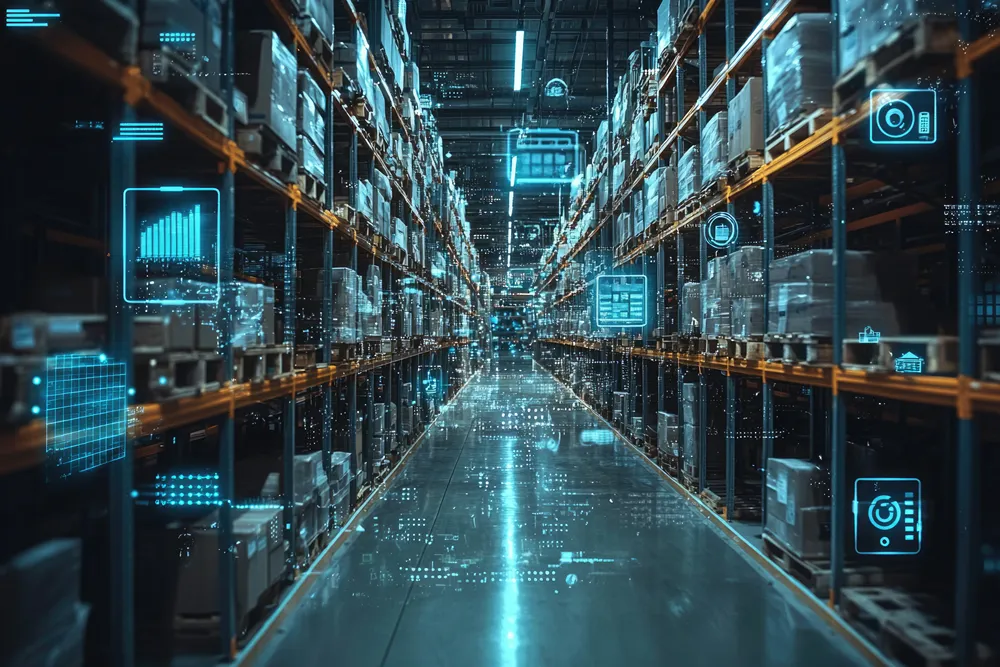
Digital twin technology represents one of the most exciting frontiers in supply chain intelligence — creating virtual replicas of physical supply chains that can be used to run predictive simulations, test response strategies, and evaluate the downstream consequences of operational decisions before they are executed in the real world. Supply chain digital twins powered by predictive analytics allow supply chain professionals to explore data from across their network in a dynamic, interactive environment — identifying vulnerabilities, testing scenarios, and building resilience strategies that would be impossible to evaluate in a live supply chain environment.
The convergence of ai-powered predictive analytics with content and distribution intelligence is also creating new capabilities in demand-side supply chain management — using predictive models trained on content engagement data, social signals, and distribution patterns to forecast demand shifts earlier and more accurately than traditional sell-through data allows. Our work in content creation and distribution illustrates how these data streams are becoming valuable inputs for supply chain demand sensing in consumer-facing industries. World Economic Forum's Supply Chain Future Report identifies AI-driven supply chain analytics as one of the defining technologies of the next decade of global trade — with organizations that invest now building supply chain intelligence advantages that will compound over time.
Key Takeaways
- Predictive analytics in supply chain management transforms operations from reactive to proactive — enabling organizations to anticipate disruptions, optimize decisions, and build supply chain resilience before problems occur.
- Predictive analytics works by learning from supply chain data to identify patterns that forecast future outcomes — improving continuously as models process new data and receive feedback.
- The key benefits of predictive analytics include improved demand forecast accuracy, reduced inventory costs, enhanced supply chain resilience, and better supplier risk management across the entire supply chain ecosystem.
- The most impactful use cases of predictive analytics in supply chains include demand forecasting, predictive maintenance, supplier risk monitoring, and inventory optimization.
- AI-powered predictive analytics enables supply chain managers to run predictive models at scale across their full supply chain — uncovering patterns in complex data that human analysts cannot process manually.
- Implementing predictive analytics in supply chain environments requires investment in data integration infrastructure, analytical capability, and change management — not just technology deployment.
- Supply chain predictive analytics applies differently across industries — from agriculture and food to logistics, retail, and manufacturing — with use cases tailored to each sector's unique risk and demand profile.
- Digital twin technology combined with predictive analytics enables supply chain professionals to simulate disruption scenarios and test response strategies before executing them in live operations.
- Trends in supply chain analytics point toward real-time processing, autonomous analytical workflows, and deeper integration of predictive insights into operational decision systems.
- Organizations that leverage predictive analytics now are building supply chain intelligence advantages that will compound over time — making the investment in predictive capabilities a strategic priority, not just an operational one.
